Imagine losing a customer today. You never received their call. They never sent a WhatsApp message. They never walked through your door. They never asked for a quotation. They simply found another business — and you may never know it happened.
That is one of the most difficult things about not having a strong online presence: you don't always see the opportunities you're losing. A potential customer can search for exactly what your business offers, discover several competitors, compare what they see and make a decision — all within minutes.
Not because your business is worse. Because another business was easier to find and easier to trust.
The cost of not having a website is bigger than the price of a website
When businesses think about websites, the first question is often "How much does a website cost?". Perhaps the more important question is "How much could my business be losing without the right website?"
Consider everything a potential customer might want to do before choosing your business:
- Find your business
- Learn what you offer
- Compare you with competitors
- See your products and prices
- Read reviews
- View your location and opening hours
- See your previous work
- Ask questions
- Request a quotation
- Book an appointment
- Make an order
- Register
- Contact you
If they cannot easily do those things online, there is friction. And every unnecessary step creates another opportunity for them to leave.
You could be losing customers who are already searching for you
A properly structured website helps potential customers discover your business when they are actively searching for products and services like yours.
- "best restaurant near me"
- "accounting services in Harare"
- "construction companies in Zimbabwe"
- "private schools in Harare"
- "web designers in Zimbabwe"
- "best catering company"
- "hardware suppliers near me"
These people aren't browsing for entertainment. Some are looking for a solution. Some are ready to buy. If your competitors have a strong online presence and you don't, they may be capturing attention that could have belonged to you.
You could be losing customers who don't know you exist
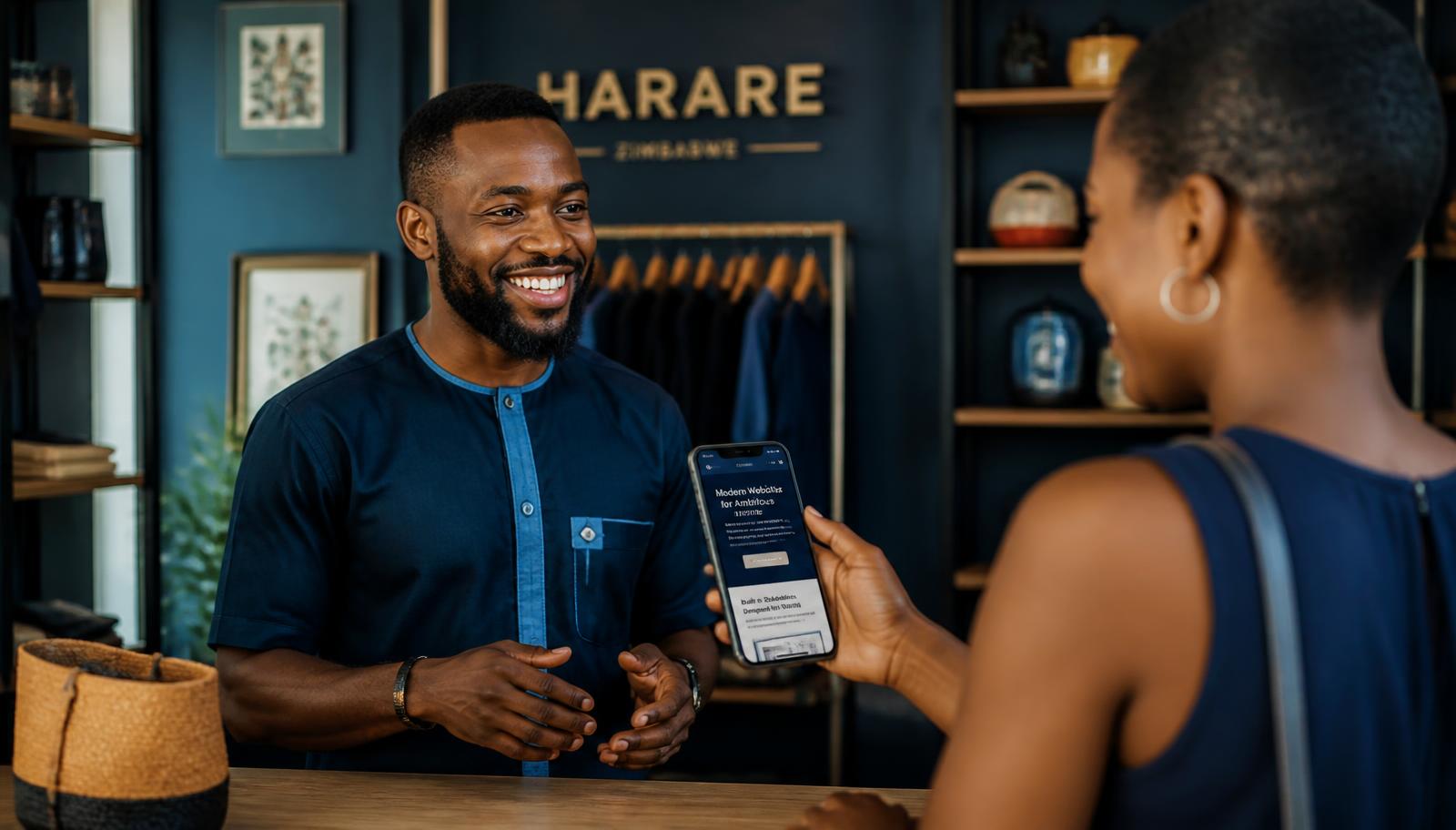
A sign outside your shop reaches people passing by. A recommendation reaches someone's friends. A social post reaches your followers. A website gives your business a digital destination that can be discovered from anywhere.
- Someone in another part of Harare
- Someone in Bulawayo
- Someone in another country researching your company
- A potential supplier or partner
- A potential employee
- A customer discovering you after hours
Your physical location has opening hours. Your digital presence doesn't have to.
You could be losing customers to a business that simply looks more professional
- Professional website
- Clear services
- Quality photographs
- Testimonials
- Easy contact
- Location
- Detailed information
- Online booking
- An incomplete social media page
- Limited information
- No clear services
- No website
- Difficult contact process
Even if Business B is actually better at what it does, Business A may create more confidence. Your digital presence should not make your business look smaller than it really is.

You could be answering the same questions over and over again
- How much does it cost?
- Where are you located?
- What services do you offer?
- What time do you open?
- Do you deliver?
- Can I book?
- Do you have this product?
- How do I register?
- What payment methods do you accept?
- Can I see your menu?
- Do you have examples of your work?
Your team may spend hours answering questions a well-designed website could answer immediately — a 24/7 information centre, so your team can spend more time doing what they actually need to do.
You could be making it too difficult for people to contact you
- Phone
- Location and Google Maps
- Contact forms
- Quote requests
- Booking forms
- Social media
- Business hours
And depending on your business, it can go further: customers can book, order, register, pay, create accounts, submit enquiries and request quotations. The easier you make the next step, the easier it becomes for customers to take it.
You could be losing sales because your business isn't available 24/7
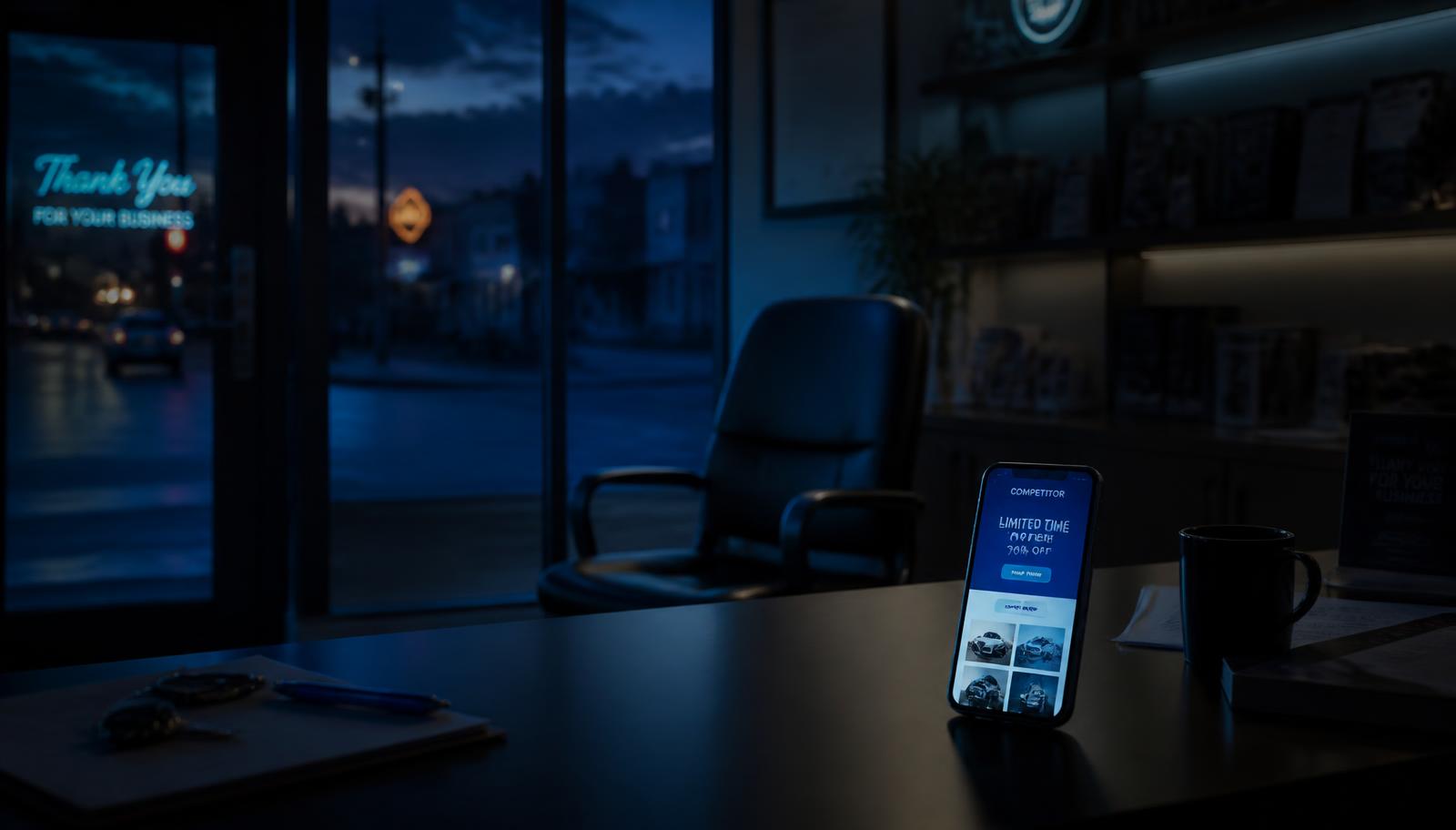
Your business may close at 5 PM. Your customers don't stop thinking about their needs at 5 PM. Someone might discover your business at 11:47 PM and want to browse products, read about your services, view your menu, submit an enquiry, book an appointment, place an order or register.
Your business may sleep. Your digital presence doesn't have to.
You could be making your business look less established than it is
You've invested in your premises, your products, your equipment, your employees, your branding, your customer service and your reputation. If someone searches for your business and finds an outdated digital presence, there is a disconnect.
- We are serious.
- We deliver quality.
- We have earned our reputation.
- We're still figuring things out.
- We may not be active.
- Try someone else.
You could be missing opportunities from outside your immediate area
- A business in Harare attracting customers from elsewhere
- A Zimbabwean company presenting itself to international customers
- A consultant reaching clients beyond their office
- A manufacturer showcasing products to distributors
- A school attracting families researching options
- A tourism business reaching visitors before they arrive
You could be making your social media work harder than it should
Social media is powerful, but it should not be your entire digital home. Profiles change. Algorithms change. Platforms change. People scroll quickly. Your website gives your business a digital home that you control.
- Social media
- Website
- Information
- Trust
- Enquiry / Booking / Order
- Customer
Your social platforms attract attention. Your website turns that attention into action.
You could be missing the opportunity to automate parts of your business
- Customer discovers restaurant
- Views menu
- Places online order
- Restaurant receives order
- Customer receives confirmation
- Parent discovers school
- Reads about programmes
- Completes online application
- Uploads documents
- Creates an account
- School receives application
- Customer discovers product
- Browses catalogue
- Creates account
- Adds product to cart
- Checks out
- Receives order confirmation
- Customer discovers service
- Reads about service
- Requests quotation
- Business receives enquiry
- Team follows up
The website is no longer simply "marketing". It becomes part of the business.

So what can a modern website actually do?
- Professional business websites — communicate your brand, services, products and value.
- E-commerce — catalogues, carts, checkout, customer accounts and order management.
- Online ordering — for restaurants, food businesses and retailers.
- Digital menus — customers browse from their phones.
- Booking systems — appointments, tables, services and reservations.
- Online registration — students, customers, members and applicants.
- Customer accounts and portals — secure, personalised digital spaces.
- Blogs — content that educates customers and grows search visibility.
- SEO — built with search visibility in mind.
- WhatsApp integration — move visitors straight into a conversation.
- Business email on your own domain.
- Analytics — understand how visitors interact with your website.
- AI — intelligent assistants where they genuinely make sense.
- Automation and integrations — connect your website to real workflows.
The real cost isn't always the website
Imagine your business gains:
Those numbers may look small. But multiply them over 12 months — then think about what those customers could be worth over several years.
Not "How much does a website cost?"but "What could the right digital presence be worth to my business?"
Not having a website isn't automatically a disaster
Let's be realistic. Not every business needs a massive website. Some genuinely need a simple digital presence. Others need an online store, a booking platform, a customer portal or custom software. The goal isn't to sell every business the biggest website possible — it's to build the right digital solution.
- Your business
- Your customers
- Your current digital presence
- Your goals
- Your challenges
- Your budget
- Your growth plans
So, how much is waiting costing you?
- A customer who couldn't find you.
- A customer who couldn't trust you.
- A customer who couldn't contact you.
- A customer who chose your competitor.
- A customer who wanted to order after hours.
- A customer who wanted to book online.
- A customer who never discovered you at all.
You may never know exactly how many opportunities those represent. And that's what makes the cost so difficult to see.
We don't just digitize businesses. We re-imagine them.
Your business has a future. Let us build it.
Ready to find out what your business could build online?