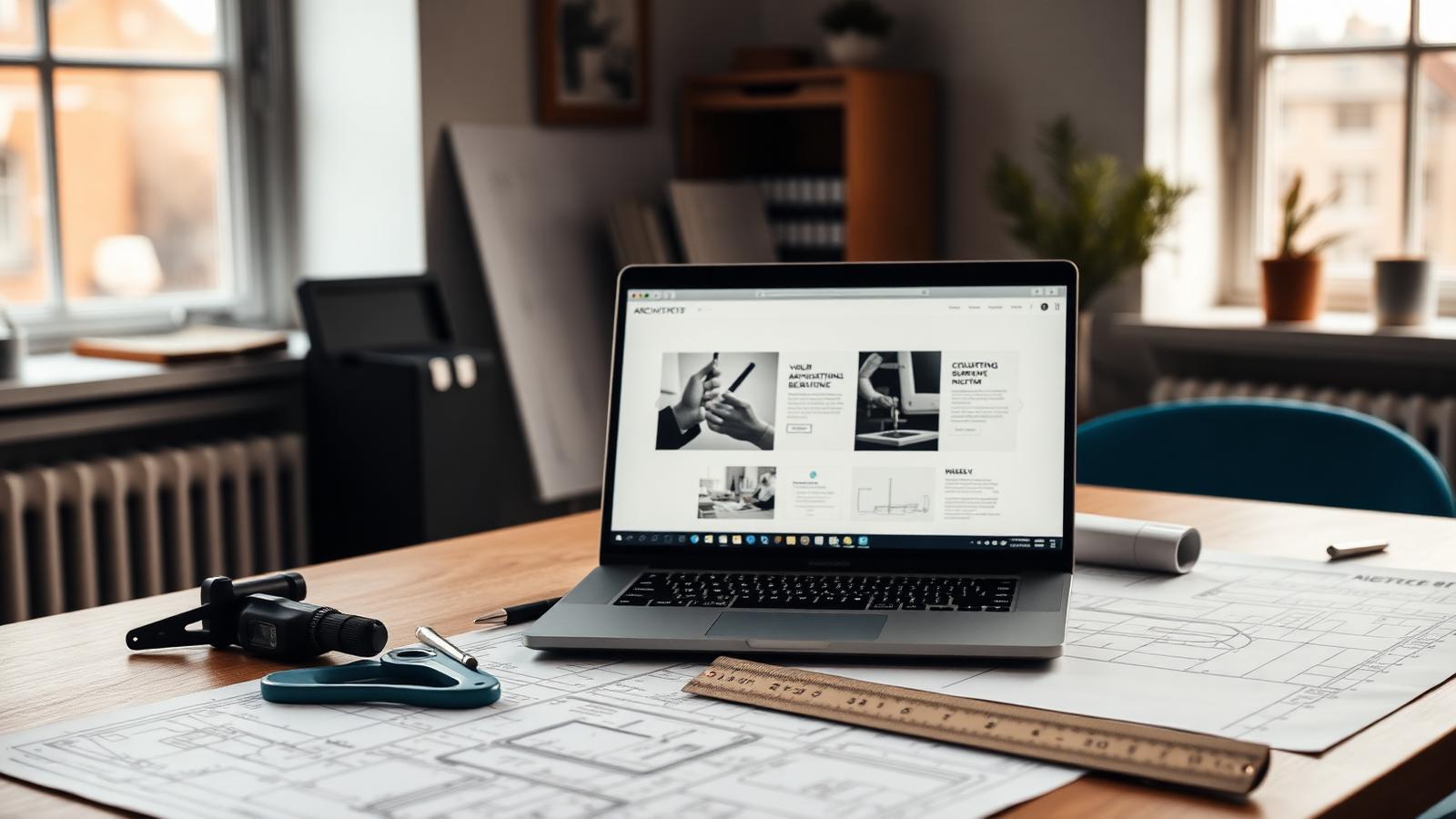

Your business already has a website. Great. But here is the question many business owners rarely stop to ask: is your website actually helping your business grow, or is it simply existing?
There is a major difference between "my business has a website" and "my website is actively helping me attract, convince, convert and retain customers".
A website can look beautiful and still fail. It can have all the right colours and still confuse customers. It can contain ten pages and still fail to explain what the business actually does. It can receive visitors every day and still generate almost no enquiries. It can even rank on Google and still lose customers to competitors with a clearer, faster and more convincing digital experience.
The question is no longer: do you have a website? The better question is: does your website have what a good business website should actually have?
1. Does your website explain what you do immediately?
When someone lands on your homepage, they should not have to investigate your business. Within seconds they should understand what you do, who you help, what you offer, why it matters and what they should do next.
One of the most common website problems is a homepage filled with vague language: innovative solutions for tomorrow, excellence without limits, your trusted partner. These statements sound professional, but they do not always communicate anything meaningful.
"We build custom software that helps businesses automate, manage and grow" tells a visitor something. The best websites combine clarity, positioning and persuasion.
2. Does your website give visitors a reason to choose you?
Your website should not only explain what you do. It should answer a harder question: why should I choose you instead of someone else?
- Experience and track record
- Approach and process
- Quality standards
- Specialisation and expertise
- Technology you use
- Results you have produced
- The customer experience you provide
If you could replace your business name with your competitor's name and the website would still make sense, your positioning is not strong enough.
3. Does your website look like the business you want to become?
Your website communicates before you do. Before a customer calls you, sends an enquiry, visits your office or speaks to your team, they are already forming an opinion.
- Professional
- Modern
- Established
- Premium
- Innovative
- Outdated
- Confusing
- Neglected
- Generic
- Inactive
Your website does not have to be the most animated site on the internet. But it should feel intentional. If your business has evolved and your website has not, your digital presence is representing an older version of your company.

4. Does your website work beautifully on a phone?
Many customers meet your business on a mobile phone first — searching for services, comparing businesses, looking for prices, viewing products or trying to contact you. If the experience is frustrating, the customer does not complain. They simply leave.
- Readable text and properly sized buttons
- Easy navigation and simple forms
- Fast loading on real mobile data
- Clear contact options
- No horizontal scrolling and no tiny text
- No important information hidden behind difficult interactions
5. Does your website load fast enough?
A slow website quietly loses opportunities. Large unoptimised images, heavy video, unnecessary animation, excessive scripts and poorly built pages all cost you enquiries — especially in markets where data is expensive and connections vary.
A cinematic website does not have to be painfully slow. Ask yourself honestly: would I patiently wait for my own website to load?
6. Does your website have clear calls to action?
After a customer reads your website, what should they do? A surprising number of websites never make this clear. Every important page should guide the visitor toward a logical next step.
- Get a quote
- Book a consultation
- Shop now
- Order online
- Make a reservation
- Apply now
- Book a demo
- Get started
A website should guide. Not just display.
7. Can customers contact you without searching for your contact details?
If someone is ready to contact your business, make it easy: phone number, email, contact form, WhatsApp, physical address, map, business hours and the social channels that matter. The right mix depends on the business, but the principle does not change — do not make a ready customer work hard to reach you.
8. Does your website build trust?
People are careful online, especially when they are about to spend money, share information or choose a service provider. Trust can be built through testimonials, case studies, real projects, real photographs, team information, certifications, partnerships, business history, clear contact details and secure practices.
Trust should be demonstrated, not invented. Real evidence is more powerful than empty claims.
9. Does your website show what you have actually done?
Many businesses say they are the best, they deliver quality, they are experienced. But what proof is available? Where appropriate, show portfolio work, projects, case studies, before and after results, client stories and testimonials.
"We can do it" becomes far more convincing when customers can see that you already have.
10. Can people easily find the right service or product?
Imagine entering a large shop where nothing is labelled. That is how some websites feel. Visitors should easily understand what you offer, how your services are organised, which one is relevant to them and where to find more detail.
Good navigation is not exciting. But bad navigation is extremely noticeable. Customers should spend their energy understanding your value, not figuring out how to use your website.
11. Does every important service have its own page?
A homepage cannot explain everything. If you offer web design, software development, AI solutions, automation, digital marketing and consultancy, do not compress all six into one small section.
- What the service is
- Who it is for
- What problems it solves
- How it works
- What the customer receives
- Relevant examples and FAQs
- A clear next step
This improves both customer understanding and search visibility.
12. Does your website actually help generate leads?
A website should not just receive visitors. It should turn the right visitors into opportunities: enquiry forms, quote requests, consultation and demo bookings, lead magnets, newsletter signups, downloadable resources, WhatsApp enquiries and interactive tools.
A professional services firm may need "book a consultation". An online store needs "add to cart". A school needs "apply now". A restaurant needs "book a table". Different businesses require different conversion journeys.
13. Does your website have a convincing customer journey?
- Discover — who are you?
- Understand — what do you offer?
- Believe — why should I trust you?
- Compare — why choose you?
- Act — what should I do next?
Your website should move people forward, not simply present random information.
14. Does your website show up when people are looking for what you offer?
Having a website does not automatically mean customers can find it. Search visibility depends on clear page structure, real service pages, useful content, location information, technical SEO, appropriate page titles, search-friendly descriptions and structured data.
If someone needs exactly what your business offers, can they find you?
15. Does your website have useful content?
A good website should not become a digital ghost town. Content educates customers, answers common questions, demonstrates expertise, improves discoverability and supports sales conversations — blog posts, guides, FAQs, case studies, industry insights, videos and resources.
The best content does not exist to fill pages. It answers questions your ideal customers are already asking.
16. Does your website make it easy to do business with you?
- Visit website
- Find phone number
- Call
- Ask for information
- Receive a form
- Fill it in
- Send it back
- Visit website
- Understand
- Complete the action
Depending on your business, customers may need to request a quote, book an appointment, order online, register, apply, reserve, pay, create an account, upload documents or track progress. Good digital experiences remove unnecessary friction.
17. Is your website secure and reliable?
- Secure connections
- Form protection
- Secure authentication where accounts exist
- Backups and monitoring
- Appropriate access control
- Software updates
- Reliable hosting
Security is not something customers always see. But they notice when things go wrong.
18. Can you update your website easily?
A business changes. Prices, services, products, staff, images, news, events, menus and opening hours all move. A good platform gives you a sensible content management approach — you should not need to rebuild the whole website because one service changed.
19. Does your website connect with the rest of your business?
- Website
- New customer enquiry
- CRM record created
- Automatic notification
- Sales follow-up
Depending on the business, your website could connect with CRM, email marketing, payment platforms, booking systems, inventory, accounting, customer portals, WhatsApp and internal software. The website becomes part of the business — not an isolated online brochure.
20. Are you losing time doing things your website could automate?
- Answering the same questions
- Sending the same documents
- Taking basic bookings
- Following up on enquiries
- Collecting customer information
- Manually organising requests
Some of these need a human. Others do not. The goal is not to replace people unnecessarily — it is to let people spend less time on repetitive work and more time on valuable work.
21. Does your website know how to work with data?
Your website should not be a black box. You should understand how many people visit, which pages are popular, where visitors come from, which services get attention, which pages generate enquiries and where customers leave. Data should answer three questions: what is working, what is not, and where is the opportunity?
22. Does your website have a strategy behind it?
If the reason your website exists is "because businesses are supposed to have websites", there is a problem. A website should have objectives: generate leads, sell products, get bookings, increase applications, build trust, educate customers, reduce administration, support existing clients or build a community.
A website without strategy is often just an expensive digital brochure.
23. Does your website still represent your business today?
You may have added services, changed your brand, improved your quality, grown your team, entered new markets or changed your target customer. But does your website know that? An outdated website still represents the business you used to be — not the business you are becoming.
24. Does your website give you a competitive advantage?
When a potential customer compares your business with competitors online, does your website explain more clearly, look more professional, make it easier to act, show more proof and provide a better experience? Your website should not be the weakest part of your sales process.
25. The final test: is your website working while you are not?
Someone discovers your business at 10pm. They want to understand what you do, explore your services, see your work, compare options, request information, book or order. Your office is closed. Your team is asleep. Your website can still be working.
- Discover
- Explore
- Understand
- Trust
- Act
So does your website have all of this?
You do not need every feature listed here. A small accounting firm does not need the same website as a large online store. A school does not need the same customer journey as a restaurant. The goal is not technology for the sake of technology — it is the right digital experience for your business.
Perhaps the question is not "do we need a new website?" but "how much opportunity is our current website leaving behind?"
Your website may not need to be replaced. It may need to evolve.
- Better content
- Better design
- Improved mobile experience
- Faster performance
- Stronger calls to action
- Better SEO
- New service pages
- A redesign
- New customer journeys
- Automation
- Integrations
- Customer portals
- E-commerce and online bookings
- Custom software
That is why the first step should not always be "let's build a website". The first step should be "let's understand what the business actually needs".
How Vision AI & Technology Systems can help
We look beyond whether a website simply exists. We look at what it could become.
- Website strategy — what should the website actually achieve?
- Website design and development — modern, responsive, high-performance experiences
- Website redesign — evolving beyond outdated or underperforming sites
- Conversion and customer journeys — making it easier for visitors to become customers
- E-commerce and online business
- SEO and content — helping the right people discover your business
- Business automation — reducing repetitive processes where appropriate
- System integration — connecting your website to the systems you already run
- AI solutions — intelligent technology where it creates real value
- Custom software — when a standard website is no longer enough
- Digital strategy and consultancy — deciding what should come next
Having a website is good. Having a website that actually works for your business is better. Your business has changed. Your customers have changed. Technology has changed. Your competitors are changing. Has your website kept up?
Every good business website has a purpose. Every great business website creates an advantage. Does yours?
Your business has a future — let's make sure your website is part of it
Vision AI & Technology Systems. From vision to digital reality. We don't just build websites; we help businesses build digital experiences that work.